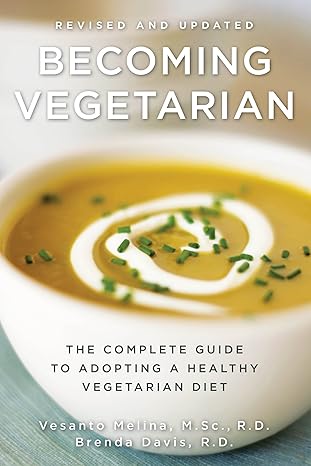
The Complete Guide to Adopting a Healthy Vegetarian Diet
Revised and Updated
By: Vesanto Melina, R.D., Brenda Davis, R.D., Victoria Harrison, R.D.
Publication date: July 16th 2013
The classic guide to vegetarian nutrition, now in a completely updated edition.
The New Becoming Vegetarian provides practical tools to help you make food choices that promote optimal health. In this new edition, you’ll find the latest information on protein, calcium, iron, good fats, vitamins (including B12), protective phytochemicals, and more-and you’ll learn how to get these nutrients in a well-balanced vegetarian diet.
- If you’re pregnant or breast-feeding, caring for babies, children, or teens, or are a senior vegetarian, get the information you need to take care of your special nutritional requirements.
- Learn how to manage successful weight loss on a vegetarian diet.
- Use “vegetarian diplomacy” to feel comfortable in any setting where food is involved.
- Enjoy 50 delicious new recipes, including contributions from renown chefs Joseph Forest, Ron Pickarski, Joanne Stepaniak, and Yves Potvin of Yves Veggie Cuisine.
4.2 out of 5 stars Customer Reviews on Amazon
3.92 out of 5 stars Community Reviews on Goodreads
Book Summary
Becoming Vegetarian is a comprehensive, science-based guide designed to help readers understand, adopt, and sustain a healthy vegetarian lifestyle. Written by registered dietitians Vesanto Melina and Brenda Davis, with chef and educator Victoria Harrison, the updated and revised edition reflects advances in nutritional science while remaining practical and accessible. The book addresses vegetarianism not only as a dietary choice, but as a lifestyle connected to ethics, environmental sustainability, and long-term health.
Introduction: Defining Vegetarianism
The book begins by clarifying what it means to be vegetarian, recognizing that vegetarian diets exist on a spectrum. These include lacto-ovo vegetarian diets (which include dairy and eggs), lacto-vegetarian diets (dairy but no eggs), and vegan diets (excluding all animal products). The authors emphasize that there is no single “correct” vegetarian diet; instead, health outcomes depend on thoughtful food choices and balanced nutrition.
The introduction also addresses motivations for choosing vegetarianism, including concern for animal welfare, environmental sustainability, cultural or spiritual beliefs, and personal health. The authors present vegetarianism as a flexible and inclusive approach that can be adapted to different values, traditions, and lifestyles.
Ethical and Environmental Perspectives
Ethical considerations are a key theme throughout the book. The authors discuss how vegetarianism can reduce harm to animals by decreasing demand for industrial animal agriculture. While the tone is informative rather than moralistic, readers are encouraged to reflect on the ethical implications of food choices.
Environmental sustainability is another major focus. The book explains how meat-centered food systems contribute to deforestation, water use, greenhouse gas emissions, and resource inefficiency. Plant-based diets, including vegetarian diets that use limited animal products, are presented as a way to reduce environmental impact and promote long-term ecological balance. This framing connects individual dietary choices to global concerns such as climate change and food security.
Health Benefits of Vegetarian Diets
A significant portion of Becoming Vegetarian is devoted to health outcomes associated with vegetarian eating patterns. Drawing on scientific research, the authors explain that well-planned vegetarian diets are associated with lower rates of heart disease, hypertension, type 2 diabetes, obesity, and certain cancers.
The book highlights the nutritional strengths of vegetarian diets, including high intakes of dietary fiber, antioxidants, vitamins, minerals, and phytochemicals. These nutrients support cardiovascular health, digestive health, and metabolic function. Vegetarian diets are also typically lower in saturated fat and cholesterol compared to meat-based diets, which contributes to improved heart health.
Importantly, the authors stress that health benefits depend on food quality. A vegetarian diet built around whole foods—vegetables, fruits, legumes, whole grains, nuts, and seeds—is far healthier than one dominated by refined grains, sugary foods, or heavily processed meat substitutes.
Core Nutrition Principles
The central section of the book focuses on meeting nutrient needs on a vegetarian diet. The authors address common concerns and misconceptions with clarity and scientific evidence.
- Protein is discussed extensively, with reassurance that vegetarian diets can easily meet protein requirements through foods such as beans, lentils, soy products, dairy, eggs, nuts, seeds, and whole grains. The book explains that eating a variety of plant foods throughout the day provides all essential amino acids, eliminating the need for strict food combining.
- Carbohydrates and fats are also examined. The authors promote complex carbohydrates from whole plant foods as the body’s primary energy source. Healthy fats from nuts, seeds, avocados, and vegetable oils are encouraged, while saturated fats are recommended in moderation.
The book pays particular attention to key micronutrients, including iron, zinc, calcium, iodine, vitamin D, omega-3 fatty acids, and vitamin B12. Readers are taught how absorption works, how to enhance nutrient bioavailability (such as pairing iron-rich foods with vitamin C), and when fortified foods or supplements may be useful. Vitamin B12 receives special emphasis, especially for vegans and near-vegans, due to its importance for nerve and blood health.
Vegetarian Diets Across the Life Cycle
One of the strengths of Becoming Vegetarian is its life-cycle approach to nutrition. The authors explain how vegetarian diets can support health at every stage of life when properly planned.
For pregnancy and breastfeeding, the book outlines strategies to meet increased needs for energy, protein, iron, calcium, and essential fatty acids. Infants and children require adequate calories and nutrient density for growth, and the authors provide guidance on age-appropriate foods and meal patterns.
The book also addresses the needs of teenagers, adults, older adults, and athletes, recognizing differences in energy, protein, and micronutrient requirements. This inclusive approach reinforces the idea that vegetarian diets are suitable for diverse populations and lifestyles.
Practical Guidance and Meal Planning
Beyond nutrition theory, Becoming Vegetarian offers practical tools to help readers put knowledge into practice. These include vegetarian food guides, sample menus, and tips for balanced meal planning. The authors discuss grocery shopping, label reading, dining out, and transitioning gradually to vegetarian eating.
Social and cultural challenges are also addressed. Readers are encouraged to navigate family traditions, social events, and cultural expectations with flexibility and confidence, emphasizing communication rather than perfection.
Conclusion: A Balanced, Evidence-Based Guide
In conclusion, Becoming Vegetarian presents vegetarianism as a nutritionally adequate, health-promoting, and environmentally responsible way of eating when properly planned. Grounded in scientific research and real-world experience, the book empowers readers with accurate information, practical strategies, and reassurance. Whether someone is curious about reducing meat intake or fully embracing a vegetarian lifestyle, Becoming Vegetarian serves as a trusted, comprehensive resource for long-term success.