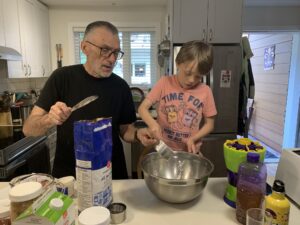
Some of my happiest childhood memories were made in the kitchen—rolling dough beside my mom, sneaking tastes, and celebrating birthdays with hands-on cookie-making parties. The ingredients back then weren’t always the healthiest, but the joy was real. Later, when my own children were young, our celebrations evolved into pizza-making parties where kids heaped on sliced veggies, olives, and cheese. These days, we get just as excited piling on cashew-based cheeses!
Over the years, I’ve realized that not everyone grows up with this kind of experience. Many adults feel stressed or discouraged by cooking—and that can affect health across the lifespan. Children who see their families enjoying food prep, exploring vegetables, fruits, whole grains, and legumes together tend to carry those positive habits forward, leading to a lifetime of health benefits. A little joy in the kitchen can go a very long way.
My dad was physiology professor who did graduate work with Banting and Best (who received a Nobel prize for their discovery of insulin). He also did cancer research and taught about diabetes at universities and hospitals in Vancouver, Toronto, and London, England. He shared with us his love of science and of travel. With time my worlds of food preparation and nutrition and health science merged. Travel around the world, including India, introduced me to tasty cuisines that are predominantly plant-based. Eventually this evolved into a book, Cooking Vegan, (in Canada published as Cooking Vegetarian), working with Joseph Forest, who had been a banquet chef and soup chef at a Four Seasons Hotel. Our recipes proved to be delicious, timeless favorites that combined great taste and simplicity, along with nutritional analysis.
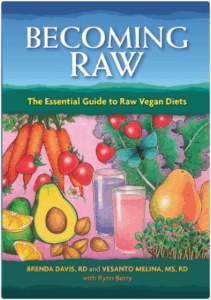
I had the opportunity to teach nutrition at a chef school in Northern California. This experience led to Becoming Raw and later The Kick Diabetes Cookbook, both coauthored with dietitian Brenda Davis. People had come from all over the world to gain chef skills using health-supportive ingredients and to reduce risk of chronic disease. Some wished to learn easy ways to use a variety of plant foods or to make their time in the kitchen more fun. Others were true gourmets who created exquisite arrangements, both raw and cooked.
One fascinating class explored flavors. We had shared with students five trays of food; each covered with ingredients. One tray held items that would contribute saltiness—amazingly (to me), including celery. Other trays featured sweet, or sour, or bitter, or umami. One delight of working with foods is that we can involve so many of our senses. I appreciate learning from chefs and others who have well-developed senses of taste and texture. For our books, we now have a team of recipe testers, based in the U.S. and Canada to make sure that every recipe is top notch!